
Presented by 
Written by Lanae Brody, Freelance Writer
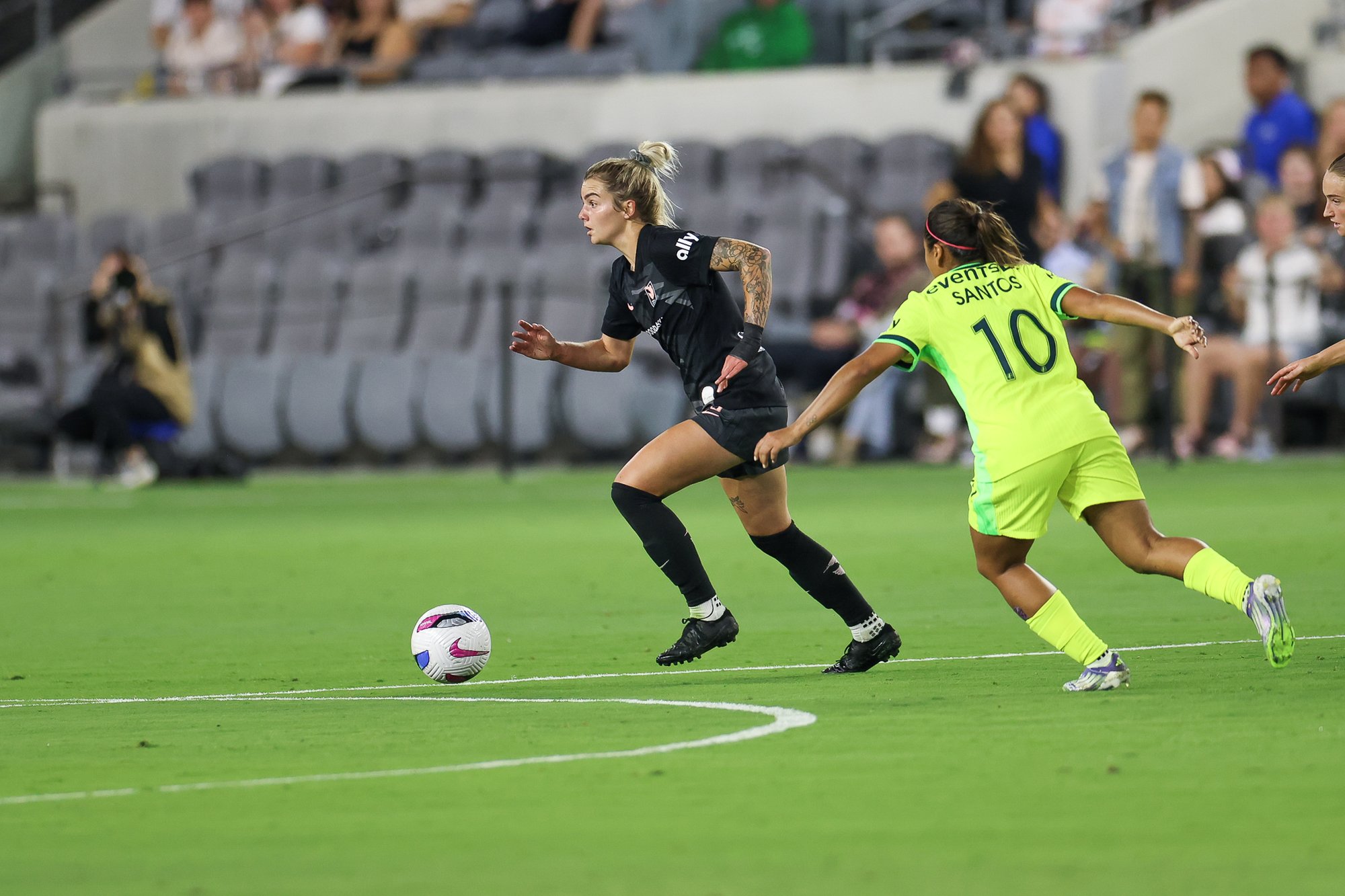
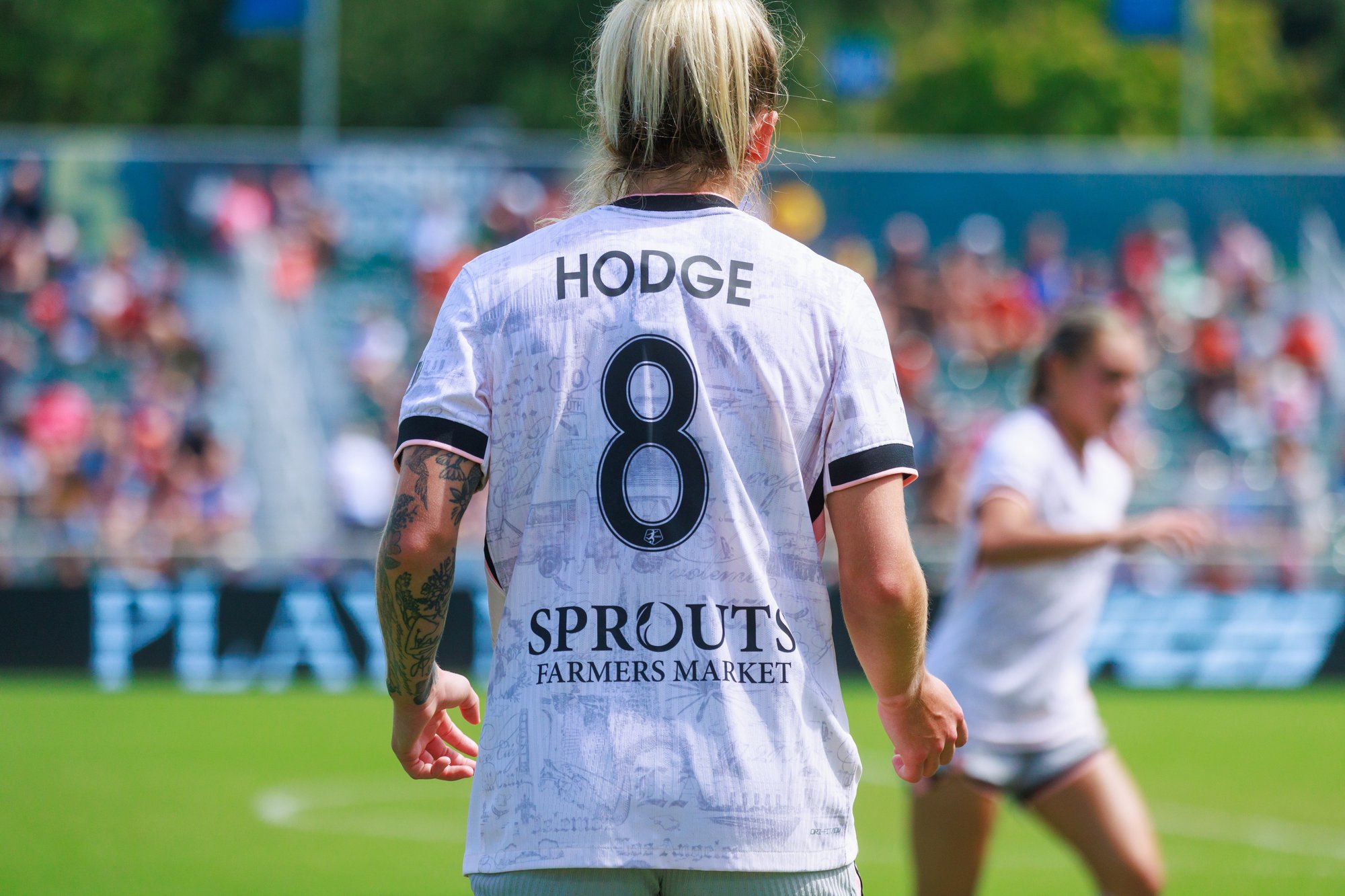
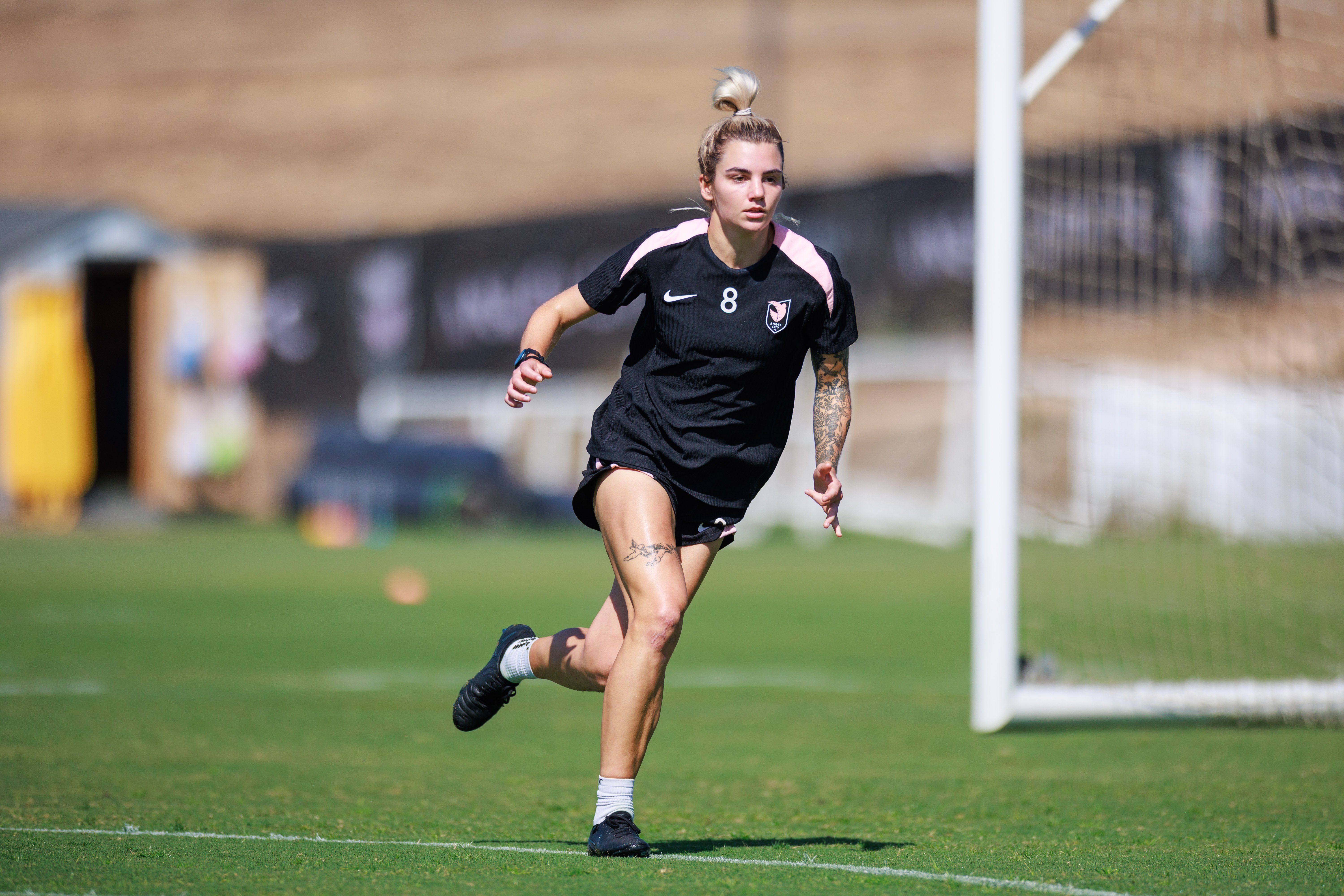
Angel City midfielder Macey Hodge started her soccer career as an innocent, tiny 4-year-old who instantly fell in love with the beautiful game.
“It was just fun for me,” says Hodge. “I would say up until [the] end of middle school, [I played] because I really enjoyed it. I didn't really play other sports, just because I loved it so much. And as a little kid, I did want to be a professional soccer player, but I feel like at that point, everybody wants to be a professional athlete or a doctor or something like that. But it didn't hold that much weight to me.”
Hodge got “pretty serious” about soccer in middle school. By the time she got to high school, she realized she could use her skills to get a scholarship in college, and committed to Vanderbilt University at just 16-years-old.
But towards the end of her high school days, Hodge realized that something felt off for mentally and she wasn’t finding love on the field like she had before.
“I started to have some bigger mental health issues just with myself,” explains Hodge. “And then I had a really strained relationship with my family at this point. [It] kind of felt like the world was crumbling. And at like 17, 18-[years-old], things feel a lot bigger than they do. I didn't really have healthy coping mechanisms. I didn't get around to people. I kind of secluded myself.”
Hodge continues, “I was super depressed. For my junior year and senior year, it was super hard to get out of bed at times. I would just take it as a win if I was getting up and going to school and going to practice, and even if I was going through the motions, you know?”
Psychiatrist Dr. Nathalie Murphy, who doesn’t treat Hodge, says it’s no surprise the chasing perfection caused a mental break.
“There are multiple pressures,” says Dr. Murphy, who’s affiliated with ACFC’s official healthcare partner, Cedars-Sinai. “Not just from the games, but also the expectations and worries about letting people down. If you're a student athlete or an athlete, not only do you have to juggle sports and your physical training, you also have other responsibilities you might have less time for because of the sport.”
Athletes make sports look easy, but Dr. Murphy reminds fans that they aren’t superheroes, and performing in the spotlight can be tougher than it looks.
“There's very intense performance pressure,” explains Dr. Murphy. “We all have an off day, right? But for athletes to be constantly on, that requires a lot of work and a lot of mental effort. At any level, being an athlete is definitely not something I would consider easy.”
Hodge also physically lost herself, going from a healthy, athletic young woman to one she didn’t even recognize.
“I was really, really skinny,” adds Hodge. “I didn't have any muscle anymore. Physically, I was very pale. I looked honestly pretty sick. I looked back on pictures of myself during this time, and physically, you could tell that I was just not in a good space. I think my biggest one was that I had no muscle anymore, and it was just kind of like, I was tiny.”
Hodge continues, “That year of my life was so different than the rest of my life because everything has always been so strict and on a schedule and very structured. But during that time period, everything was kind of dependent on my mood, and sometimes it was up, sometimes it was down. I feel like there was a really big lack [of] structure.”
Hodge eventually made it to college, but the pressures of attending a prestigious school, changing locations and performing were a recipe for disaster for Hodge, who was already in a bad place.
“I just had to let it go,” explains Hodge. “And then I stepped away from the game and fully had the intention of never picking it up again. I would say for the first, like, 4 or 5 months of that decision, I was kind of living in pure ignorance, not even thinking about it. I definitely resented myself, and honestly to a point, others, because I knew I had something special that I could have pursued. But I think I was bitter deep down knowing that I didn't.”
After visiting a friend at college at the University of Florida and watching practice, something happened and she got a sudden urge to get back on the field.
“I called my club coach and was like, ‘Crazy idea: But I feel like I wish I would have tried, and I feel like I'm in a place where I can try. And if I try and it really isn't for me anymore, then whatever, but I wanna try.’”
Hodge found therapy and made the decision to attend Mississippi State, a smaller school that expressed interest in her. She took the chance and connected with a new group of friends who understood her.
Then, Hodge began focusing on finding her footing physically in the sport again while giving herself a bit of grace.
“My first two years of college there, it wasn’t about football,” explains Hodge. I was having a good time remaking the connection between me and football and what that meant in my life. But honestly, it was more about the love and support that I got from my teammates around me, and that was something that I hadn't felt in a long, long time.”
Admitting she was “absolutely terrified,” Hodge got stronger daily by taking her workout routine back from nothing to slow and steady. She would spend time alone in the gym on her specialized routine to get back to the place she once was, and within a few months, she felt like she was back in shape and her mind and body quickly realigned.
“I think, everything is connected, so I think when we are happy, and like we're in a good mental state, I think that it reflects, you know, when you play football,” Hodge explains. “I felt like I had purpose, just like for me showing up at training every day because my friends loved me, my teammates loved me. I would say my first two years, I wasn't even thinking about playing pro, honestly.”
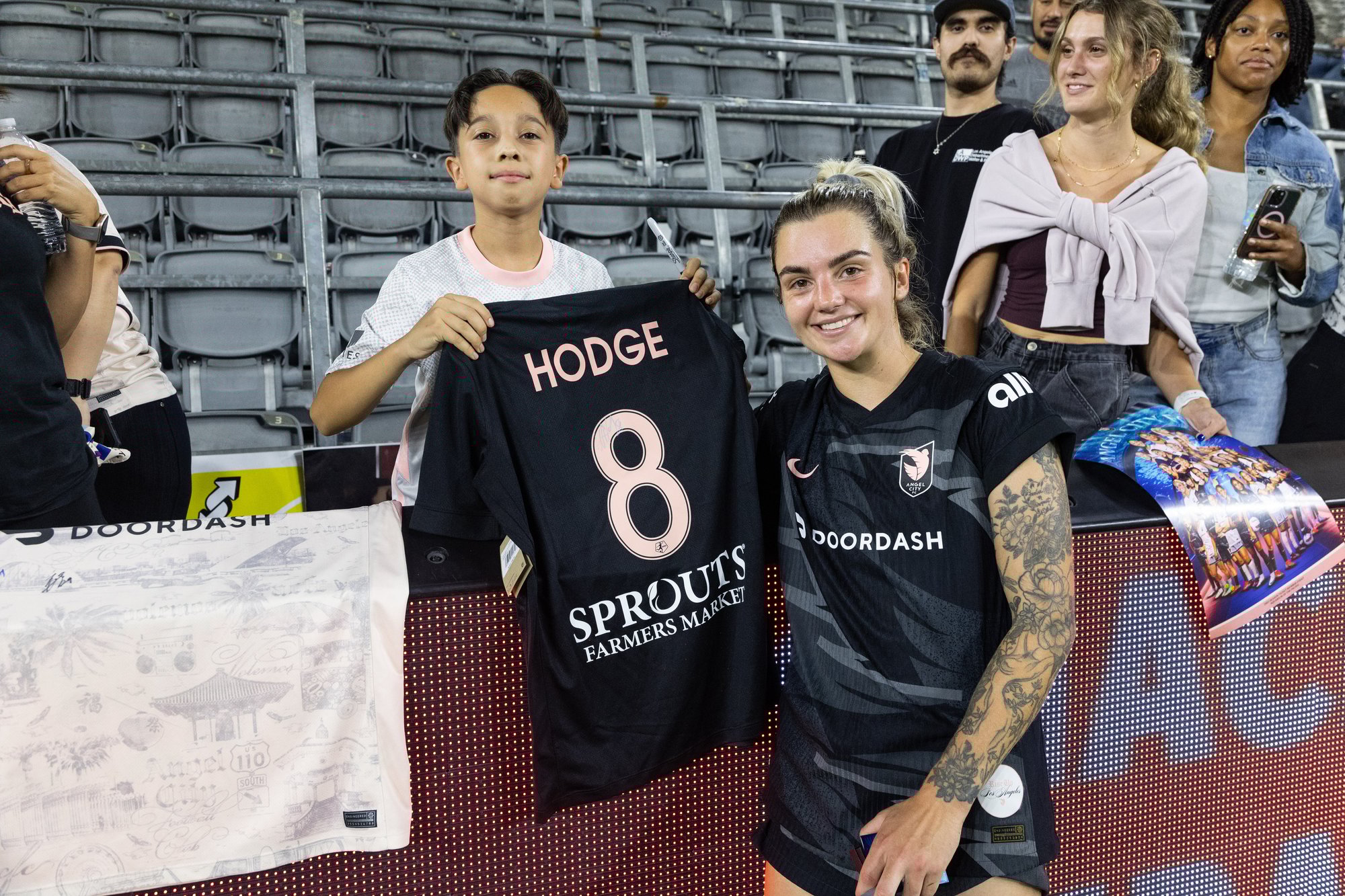
By junior year in college, all the hard work paid off and Hodge made the SEC Watchlist. Hodge later went on to sign her first professional deal with Angel City FC for two years in December, 2024 ahead of the 2025 season.
To this day, she credits her teammates and roommates for helping her overcome her darkest days as she now prioritizes her mental health game both on and off the field.
“I think for me personally, especially being in this environment that's very competitive, high stress, it's been important for me to prioritize my mental health more than ever,” says Hodge, who remains in therapy and credits meditation, walking her dog and yoga for keeping her mind right. “Just because it is such a stressful environment and you do want to perform at your best.”
Although her journey wasn’t always linear, Hodge knows it isn’t about how she started her career, but how she found herself again on the field that matters.
“I definitely think that everything worked out the way that it should,” says Hodge with a smile. “I think it was so unconventional and definitely was not ideal, but I think reflecting on my entire journey, everything worked out the way that it should. I'm extremely, extremely grateful for the doors that soccer has opened for me.”